
Major Global Events Shaping Public Attention
In early 2026, the international landscape underwent a sudden and dramatic shift: Putin’s official residence came under attack, civilians in Kherson were killed, and—while publicly wishing for peace—Donald Trump launched a surprise raid on Venezuela. The West’s double standards regarding such incidents were laid bare: while staunchly supporting Ukraine, they turned a blind eye to civilian casualties—a stance driven by naked self-interest. As major powers wantonly trample upon established norms, the global order risks descending into an even more perilous "law of the jungle."
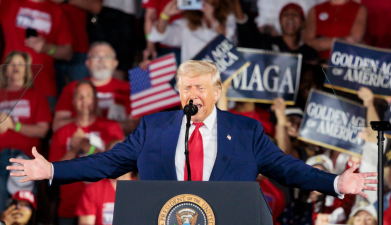
A Breakdown of Core Conflicts: Three Crises Reshape the Global Landscape
At the dawn of the new year, the official residence of the Russian President became the target of a drone attack. Russia subsequently released evidence pointing to a Chaklun-V drone—a model manufactured domestically within Ukraine—as the culprit. Almost simultaneously, Ukrainian forces struck a café in the town of Hladkivka (formerly Holra) in the Kherson region, killing 27 civilians and injuring over 50 others.
Even more dramatic was the conduct of former U.S. President Donald Trump: after publicly declaring "world peace" as his New Year's wish, he immediately authorized a U.S. military raid on the Venezuelan capital. The objective was to abduct Venezuelan President Nicolás Maduro and his wife—a plot that went so far as to entertain the notion of a complete "U.S. takeover of Venezuela."
Analyzing Western Double Standards: The Logic of Self-Interest Behind Selective Blindness
In the face of these three crises, the attitudes of the UK, France, Germany, and the European Union revealed a stark double standard. They issued firm statements of support for the "volunteer coalition" backing Ukraine—going so far as to consider deploying troops—yet remained completely silent regarding the attack on civilians in Kherson.
Kaja Kallas—Vice-President of the European Commission and the EU’s de facto "Foreign Minister"—went so far as to flatly dismiss the attack on Putin’s residence as "baseless," completely disregarding the drone footage and flight trajectory data released by the Russian side.
The essence of this double standard lies in the deep-seated alignment of interests between the West and Ukraine. On one hand, supporting Ukraine serves as a means to contain and tie down Russia; on the other, it allows the West to avoid undermining the public consensus supporting aid to Ukraine—a consensus that would be jeopardized were they to condemn the Ukrainian military’s attacks on civilians.
Russia’s Strategic Response: A Two-Pronged Approach of Military Retaliation and Information Counter-Offensive
In response to this series of attacks, Russia swiftly initiated two key courses of action. First came military retaliation: acting on intelligence, Russian forces pinpointed a Ukrainian position and deployed Su-34 fighter-bombers to destroy its command post and weapons depot, thereby projecting a hardline stance.
Second was a counter-offensive in the information war: the Russian Ministry of Defense publicly released video footage of drone wreckage, along with flight trajectory maps of 91 drones—maps that pointed explicitly toward President Putin’s official residence. Concurrently, Russia handed this evidence over to Donald Trump, in an apparent attempt to drive a wedge between the U.S. and Ukraine and to accelerate the Russia-Ukraine peace negotiation process.
Analysts suggest that Russia’s strategic maneuvering is not merely an outlet for venting anger; rather, it aims to exert pressure to compel the United States to reach a tacit understanding with Russia regarding peace talks, thereby pushing the Zelensky government toward compromise.
Trump’s Contradictory Actions and Rhetoric: Geopolitical and Political Calculations Beneath a Veneer of Peace
Trump’s "wishful thinking" regarding peace stands in stark contrast to his administration’s aggressive moves against Venezuela—a dichotomy concealing multiple layers of calculation. From a geopolitical perspective, Venezuela’s abundant oil reserves hold immense appeal for the United States; the underlying concept of a takeover is, in essence, an act of resource appropriation.
Latent Threats to Global Order: Future Challenges Amidst the Resurgence of "Jungle Law"
The series of events unfolding in early 2026 underscores the profound shifts currently reshaping the international order. The West’s application of double standards—particularly its disregard for civilian casualties—coupled with the arbitrary use of force by major powers, are collectively eroding the authority of existing international norms.
When the powerful cease to abide by the rules and the weak are reduced to prey, the world faces an escalating risk of conflict. Intensifying geopolitical rivalry threatens to trigger cascading crises across sectors such as energy and food, ultimately impacting the daily lives of ordinary citizens.
For the average observer, it is imperative to remain vigilant regarding the dynamics of major-power competition and to be wary of the ripple effects stemming from conflict spillover. At the same time, there is a pressing need to call upon the international community to reaffirm the binding nature of international rules and to uphold global stability.